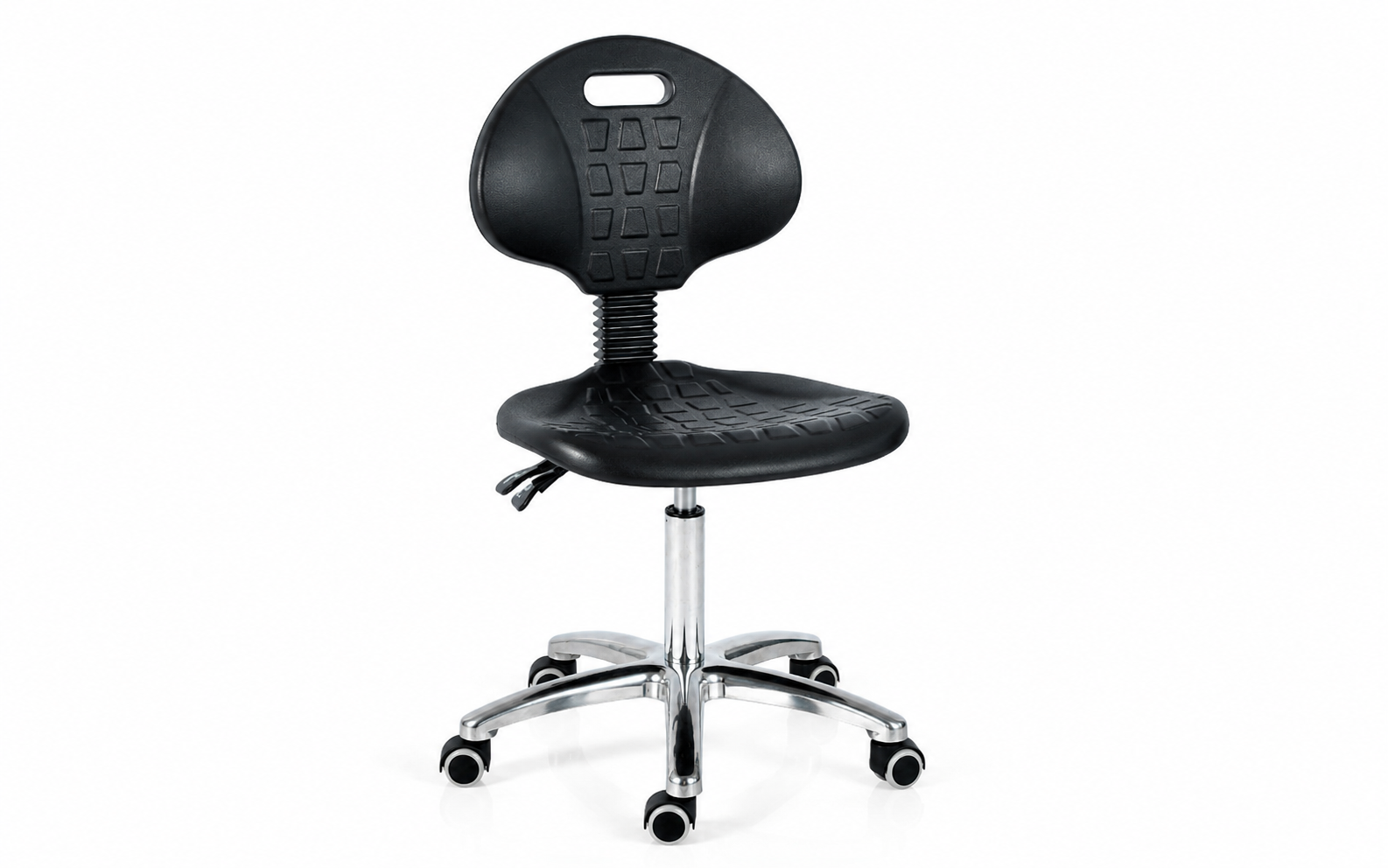
Companies in Argentina need configuration standards for laboratory chairs and laboratory furniture because laboratories operate as integrated work environments, not as collections of unrelated products. When benches, chairs, storage units, mobile tables, instrument platforms, and circulation spaces are purchased separately without a common standard, the result can be inconsistent heights, restricted movement, duplicated components, and repeated adjustment problems. A chair may technically fit within a room but still fail to align with the bench, interfere with drawers, occupy too much aisle space, or force users to work outside an efficient reach zone. Establishing configuration standards allows laboratory managers, facilities teams, procurement departments, architects, contractors, and distributors to agree on dimensions and interfaces before each project begins. These standards can define bench heights, knee clearance, preferred seat-height ranges, base diameters, caster or glide rules, foot-support requirements, surface materials, storage clearances, and minimum circulation zones. When a company evaluates an industrial polyurethane with chrome foot ring and casters adjustable laboratory chair, the product should be reviewed as part of this complete system: the height range should match the approved bench category, the base should remain within the planned footprint, the casters should suit the floor and movement pattern, and the foot ring should support users at elevated workstations. Argentine distributors can help create a configuration matrix that links each laboratory zone to an approved chair type, bench standard, storage layout, and service requirement. This matrix reduces guesswork and gives suppliers a clear framework for quotations, samples, and future orders. It also helps companies avoid last-minute changes during renovation or installation, because the physical relationship between furniture elements has already been defined. In B2B procurement, this consistency improves both project efficiency and internal approval, since every department can evaluate the same documented standard instead of debating each product from the beginning.
Configuration standards also create major advantages for purchasing control, maintenance, and multi-site growth. Many Argentine companies operate several laboratories, plants, clinics, campuses, or regional branches that have developed through different projects and suppliers. Over time, these sites may accumulate chairs with different gas lifts, bases, casters, foot rings, upholstery materials, and replacement parts, while benches and cabinets may follow inconsistent dimensions. This makes maintenance slower, stock planning more expensive, and repeat purchasing less reliable. A standardization program allows the company to define a limited number of approved furniture families for specific applications, such as general laboratory work, elevated bench tasks, instrument monitoring, teaching areas, clean support zones, and industrial quality control. If an industrial polyurethane with chrome foot ring and casters adjustable laboratory chair is approved for one high-bench category, the company can document the exact seat, base, ring, caster, adjustment range, packaging, and spare-parts references. Procurement teams can then compare suppliers against the same specification, facilities teams can maintain compatible components, and distributors can forecast demand more accurately. Standardization does not mean using one chair everywhere; it means creating controlled choices that reflect real applications. A company may approve two or three configurations instead of dozens of uncontrolled variations. This approach improves negotiating leverage because buyers can consolidate volume and request framework pricing, phased deliveries, or call-off agreements. It also reduces the time needed for technical review when a new branch, room, or project is added. Argentine distributors benefit because they can stock selected modules, prepare faster quotations, and provide clearer after-sales support. For B2B customers, the operational value is substantial: fewer incompatible parts, easier training, more consistent user experience, better visual coordination, and a lower risk that a future replacement will differ from the original installation.
The long-term reason for establishing configuration standards is that laboratories continue to evolve. New instruments, changing workflows, digital documentation, shared-user environments, and phased expansions can alter how rooms are used, so standards should provide both consistency and controlled flexibility. Companies should review their configuration library regularly and update it when user feedback, maintenance data, supplier performance, or space-planning lessons indicate a better approach. When an industrial polyurethane with chrome foot ring and casters adjustable laboratory chair remains part of an approved standard, the company should verify that the manufacturer or distributor can preserve component continuity, communicate changes in advance, and supply compatible replacements over time. Governance is essential: every approved configuration should have an owner, version number, technical drawing, application description, supplier status, and review date. Any proposed deviation should explain why the standard no longer fits and what effect the change will have on cost, lead time, maintenance, and future compatibility. Argentine companies can also connect standards to digital procurement tools so that buyers select from approved options rather than creating a new specification for every order. Distributors can support this system with samples, configuration guides, BIM or CAD data, spare-parts maps, installation checklists, and post-project reviews. Original Google-friendly content about laboratory chair standards, furniture compatibility, modular planning, and lifecycle management can further attract serious B2B buyers who are looking for reliable project partners. Ultimately, configuration standards help companies protect capital investment, simplify expansion, improve workplace consistency, and create a more scalable laboratory environment. By treating chairs and furniture as an integrated system with documented interfaces and controlled choices, businesses in Argentina can reduce procurement errors, improve supplier accountability, and build laboratories that remain easier to operate, maintain, and expand for years.
READ MORE