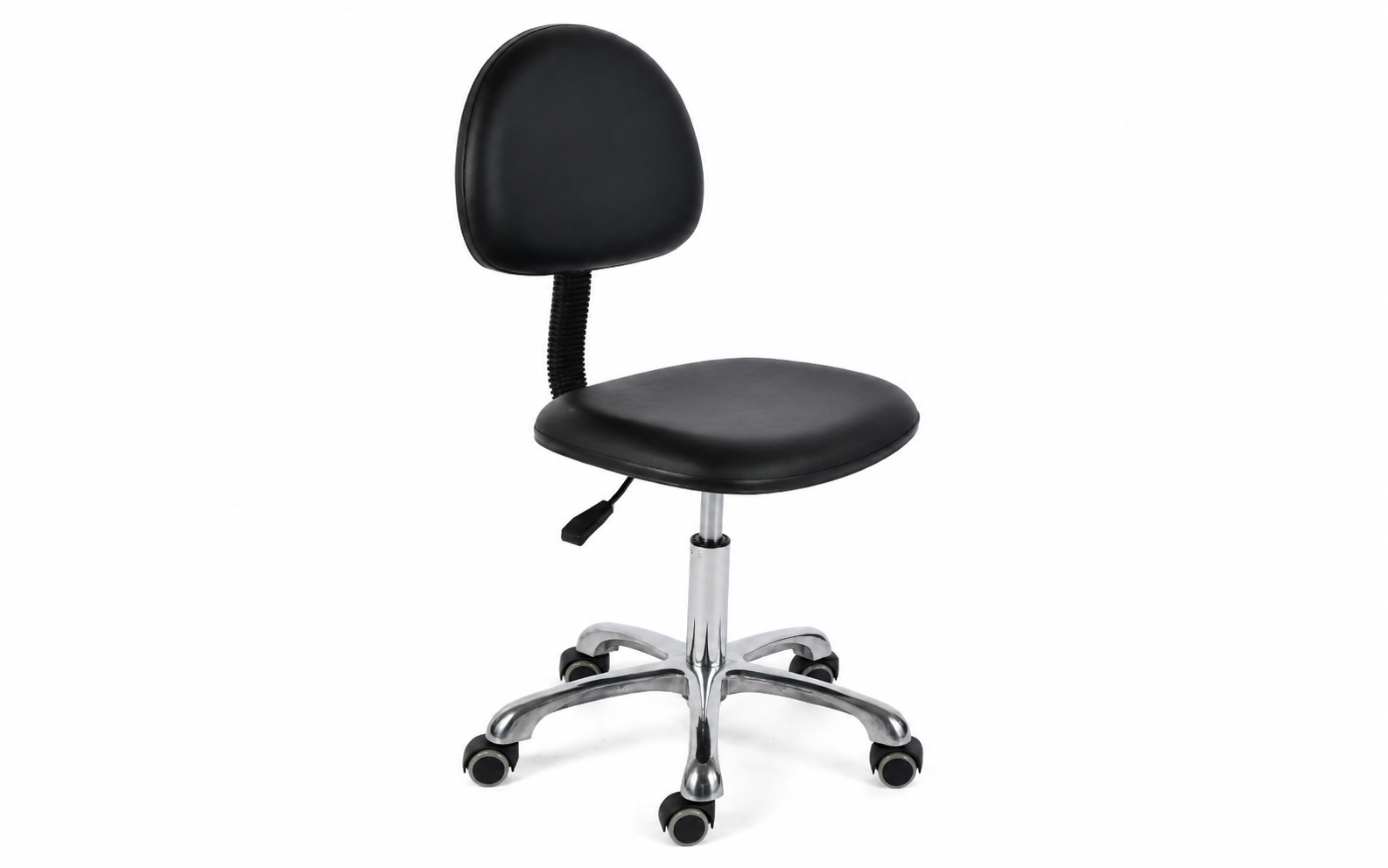
Laboratories in Argentina are paying more attention to the application value of ergonomic laboratory chairs because modern laboratory work is increasingly diverse, precise, and dependent on stable interaction between the user, the workstation, and the equipment. Ergonomics in this context is not simply about making a chair feel comfortable; it is about enabling technicians, researchers, analysts, students, and quality-control personnel to perform specific tasks with fewer unnecessary movements and more consistent working positions. A microscopy station, a sample-preparation bench, an instrument-monitoring area, and a documentation point all create different postural and spatial demands. When seating does not match the task, users may repeatedly lean, twist, stand, or reposition themselves, which can interrupt concentration and reduce workflow consistency. For this reason, Argentine B2B buyers are evaluating seat-height range, base diameter, mobility, foot support, surface material, clearance, and adjustment speed as parts of an integrated workstation. An industrial polyurethane with chrome foot ring and casters adjustable laboratory chair may provide strong application value at elevated benches where users need practical foot support, controlled mobility, and a surface suited to routine cleaning. Distributors can demonstrate this value by measuring bench height, observing reach zones, reviewing floor conditions, and testing the chair with representative users rather than relying on generic claims. This approach allows procurement, laboratory management, facilities, and safety teams to connect the chair with real operating outcomes such as better access to instruments, smoother transitions between tasks, more consistent positioning, and reduced need for improvised supports. As laboratories in Argentina modernize and standardize their work environments, application-based ergonomic evaluation is becoming a more credible purchasing method than choosing chairs by appearance or price alone.
The growing importance of ergonomic application value is also linked to the way laboratories organize shared work, long shifts, and multi-user environments. Many facilities now operate with rotating teams, cross-trained employees, visiting specialists, students, or temporary project staff, which means one chair may need to serve people with different body sizes and work habits throughout the day. A chair that suits only one user can create delays, while a configuration that can be adjusted quickly helps the next person begin work with less disruption. Buyers are therefore looking for ergonomic solutions that support repeatable setup, not just individual preference. When evaluating an industrial polyurethane with chrome foot ring and casters adjustable laboratory chair, companies can test how rapidly users adjust the seat height, how naturally they place their feet, whether the caster movement remains appropriate for the floor, and whether the chair returns to a stable working position after repositioning. A structured trial can compare several departments, task durations, and workstation types, then record feedback on reach, visibility, movement, fatigue, and adjustment simplicity. Argentine distributors can turn these findings into a technical recommendation matrix showing which configurations fit elevated benches, shared analysis stations, inspection areas, and teaching laboratories. This makes the purchasing decision more transparent for corporate customers and helps finance teams understand why one model may create more value over time than a cheaper but poorly matched alternative. Ergonomic application value also supports standardization because companies can define approved configurations for recurring tasks instead of buying different chairs for every department. A limited, well-documented range simplifies user training, spare-parts planning, and future expansion while preserving the flexibility required by different laboratory functions. In this way, ergonomics becomes a management tool for improving consistency across people, shifts, and locations.
Laboratories are also focusing on ergonomic application value because it influences long-term productivity, maintenance efficiency, and the return on workplace investment. A well-matched chair can help protect the usefulness of expensive benches and instruments by allowing employees to work at the correct height and distance, while a poorly matched chair may undermine the performance of the entire workstation. Companies should therefore evaluate laboratory seating through lifecycle criteria such as durability, component replacement, warranty response, cleaning requirements, and the supplier’s ability to preserve an approved configuration over future orders. If an industrial polyurethane with chrome foot ring and casters adjustable laboratory chair is selected for a defined application, the distributor should document the exact seat, gas lift, base, ring, caster, and height range so that replacements and expansions remain compatible. Post-installation reviews can confirm whether employees use the adjustments correctly, whether the chair continues to move safely on the floor, and whether any task requires a different setup. These reviews provide valuable data for future procurement and help companies distinguish between temporary user preference and a genuine application problem. Argentine distributors can strengthen their B2B position by offering ergonomic site assessments, sample trials, workstation-fit reports, adjustment guidance, and spare-parts support as part of the commercial package. They can also create original Google-friendly content about ergonomic laboratory seating, elevated bench compatibility, multi-user adjustment, laboratory workflow, and lifecycle value, attracting buyers who are actively researching practical solutions. For laboratories in Argentina, the real value of ergonomic chairs lies in how well they support the work being performed, how easily they adapt to users, and how reliably they remain part of the operating system over time. This is why ergonomic laboratory seating is moving from a secondary furniture decision to a strategic element of workplace performance and B2B procurement planning.
READ MORE