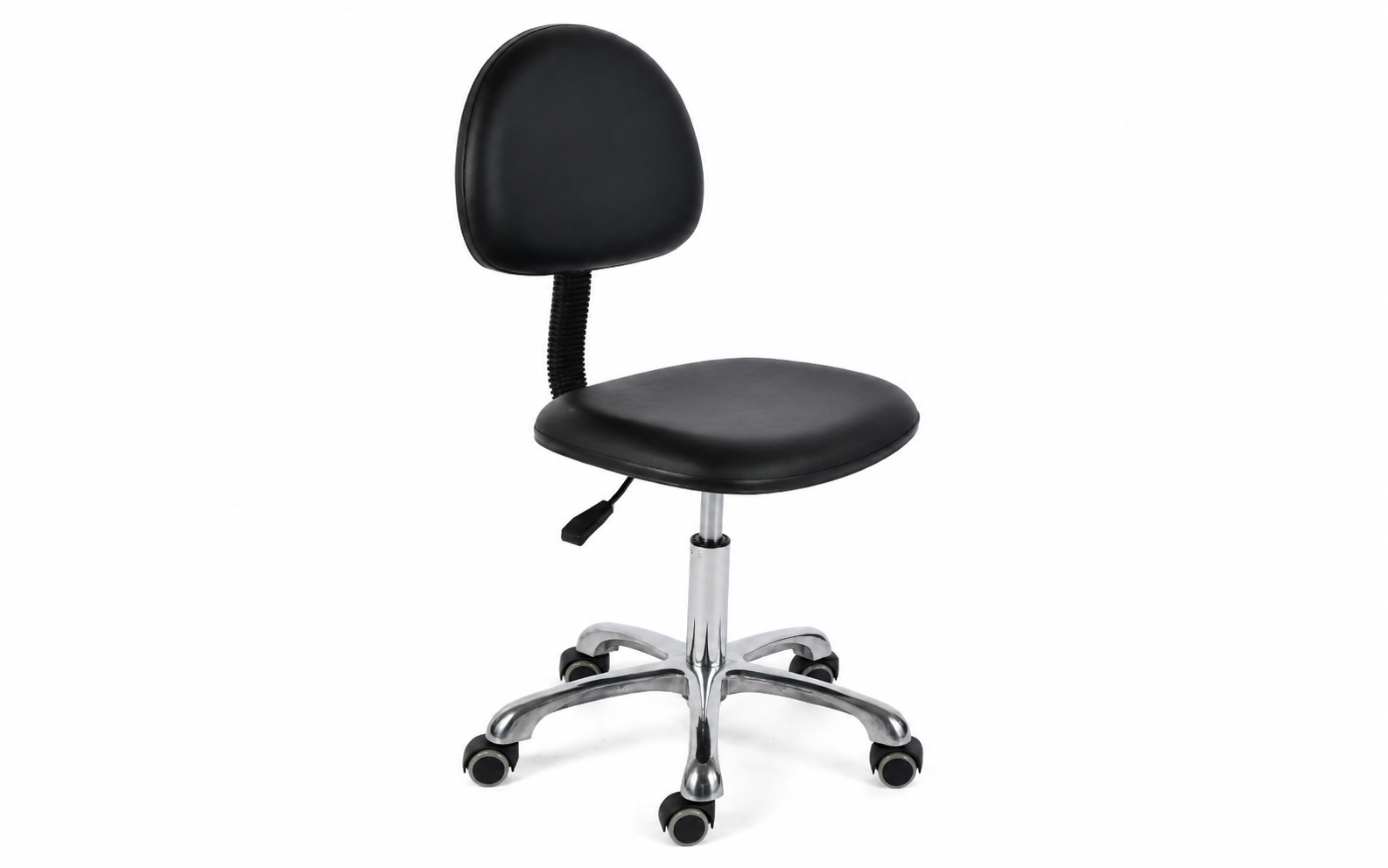
Companies in Argentina can evaluate laboratory chair performance indicators more accurately by beginning with the physical and functional requirements of the real workplace rather than relying only on catalog specifications. The first group of indicators should measure structural stability, user load, seat-height range, base footprint, and compatibility with the intended workstation. Procurement teams should confirm how much weight the chair is expected to support, how often users will enter and leave the seat, whether the laboratory operates in one shift or several shifts, and whether the chair will be used at standard desks, elevated benches, instrument stations, or inspection areas. Stability testing should include normal sitting, turning, reaching, and repositioning rather than a static showroom check. Height adjustment should be tested at both the lowest and highest practical positions, with representative users confirming whether their arms, legs, and feet remain supported during typical tasks. When evaluating an industrial polyurethane with chrome foot ring and casters adjustable laboratory chair, buyers should record the usable seat-height range, foot-ring position, base diameter, movement around the bench, and clearance from drawers, equipment stands, and nearby storage. Argentine distributors can support this process by providing drawings, measurement guides, and sample units, while laboratory managers can identify the tasks that require the greatest precision or longest sitting periods. A professional evaluation form should convert these observations into measurable scores, such as stability under movement, fit at the workstation, ease of adjustment, and percentage of users who can achieve a suitable working position. This makes the decision more objective and gives procurement, facilities, and safety teams a common basis for approval.
The second group of performance indicators should focus on mobility, control, surface suitability, and user interaction during daily work. Casters should be assessed on the actual floor because performance can vary significantly between smooth vinyl, tile, resin, concrete, and other surfaces. Buyers should test starting movement, stopping control, turning radius, noise, and whether the chair remains stable when the user reaches toward equipment or changes direction. The foot support should be evaluated for stability, adjustability, and comfort across different body sizes, especially at high benches. Surface performance should include resistance to routine cleaning, visible wear, scratches, and the effect of repeated use. For an industrial polyurethane with chrome foot ring and casters adjustable laboratory chair, the evaluation can include how easily the polyurethane seat is cleaned, whether the chrome ring maintains its position, how consistently the casters roll, and whether the adjustment controls remain accessible when the user is seated. Argentine companies should also measure usability indicators such as the time required for a new user to adjust the chair, the number of incorrect adjustments observed during a trial, and the amount of repositioning needed during a typical task. These indicators are valuable for shared laboratories where technicians, students, researchers, or operators rotate through the same workstation. A structured sample trial should include users from different shifts and departments, with comments linked to specific tasks rather than general comfort opinions. Distributors can summarize the results in a technical comparison table covering movement, adjustment, cleaning, shared-user suitability, and task fit. This helps B2B buyers understand whether the chair supports professional usage consistently, not just whether it feels acceptable during a brief test.
The third group of indicators should measure long-term performance, maintenance demand, service response, and total ownership value. A laboratory chair may perform well during an initial sample trial but create problems later if casters wear quickly, adjustment mechanisms lose consistency, spare parts are unavailable, or the supplier cannot reproduce the approved configuration. Companies should therefore establish indicators for expected service life, frequency of maintenance, component replacement time, warranty response, defect rate, and repeat-order accuracy. If an industrial polyurethane with chrome foot ring and casters adjustable laboratory chair becomes part of an approved standard, the buyer should preserve the exact seat, base, gas lift, ring, caster, and height specifications so future purchases and repairs remain compatible. Argentine distributors can strengthen the evaluation by providing spare-parts lists, maintenance instructions, warranty procedures, and evidence of previous batch consistency. After installation, companies can track user complaints, adjustment failures, caster replacements, surface damage, and downtime caused by service issues. These records should be reviewed after three, six, and twelve months to confirm whether the chair continues to meet the original professional requirements. Total ownership analysis should include purchase price, delivery, assembly, expected maintenance, replacement components, and the cost of operational disruption. Original Google-friendly content about laboratory chair testing, performance indicators, workstation compatibility, caster evaluation, and lifecycle measurement can also help distributors attract serious B2B customers who are looking for evidence-based solutions. By combining structural, functional, user, and lifecycle indicators, companies in Argentina can select laboratory chairs with greater confidence, reduce specification risk, and ensure that professional usage requirements are supported throughout the product’s service life.
READ MORE