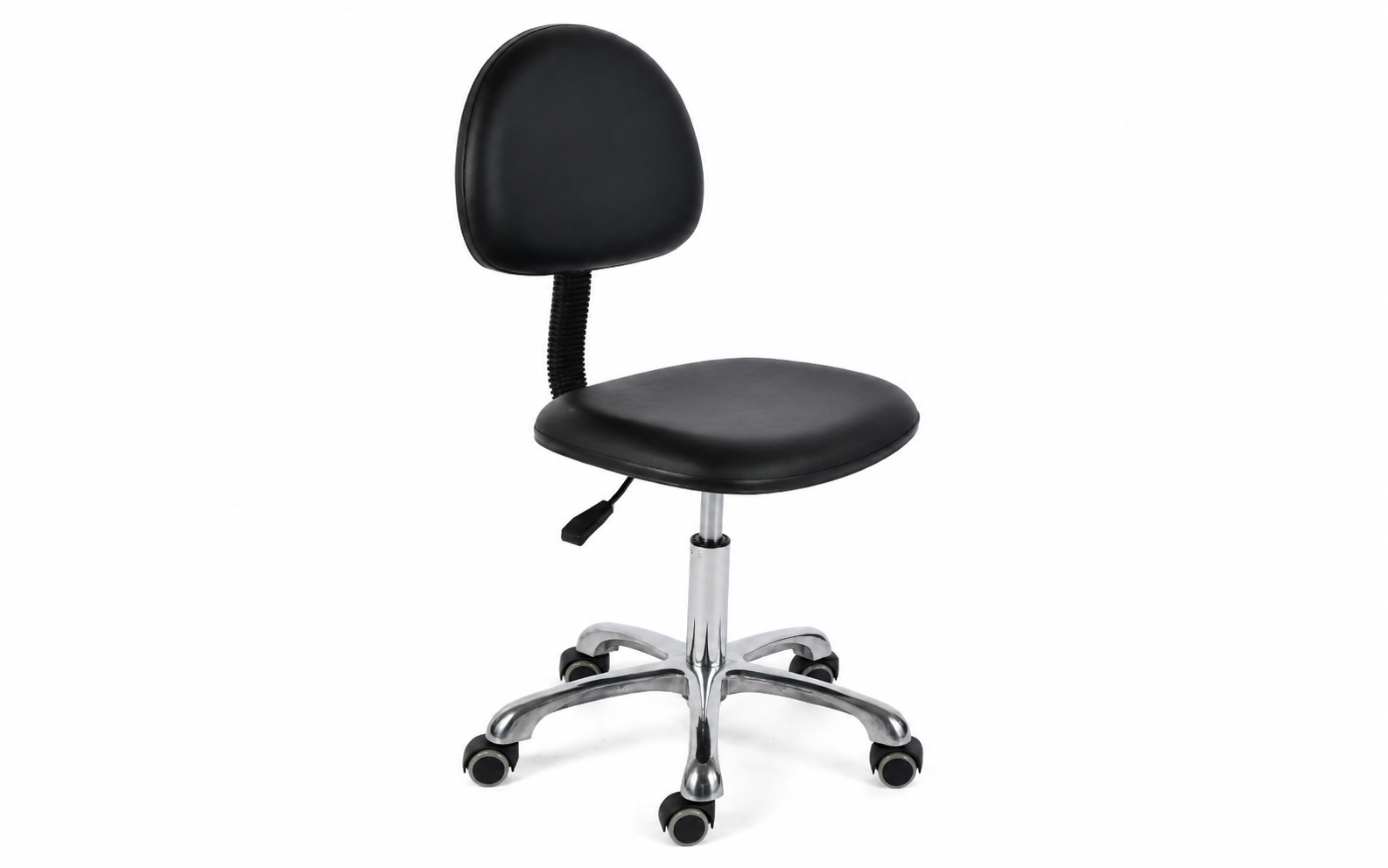
Distributors in Argentina can plan laboratory chair inventory resources more accurately by dividing the country into demand zones based on industry structure, laboratory concentration, delivery time, and project behavior instead of applying one national stock policy. Demand in a pharmaceutical and university center may favor standardized laboratory seating, frequent samples, and repeat orders, while mining, energy, agriculture, food-processing, healthcare, or industrial regions may require different configurations, order sizes, and service levels. The first step is to build a regional demand map using historical sales, open quotations, sample requests, dealer inquiries, tender activity, replacement cycles, and announced laboratory projects. Each province or city cluster should be assigned a demand profile showing average quantity, lead-time tolerance, dominant applications, seasonal patterns, and conversion probability. When an industrial polyurethane with chrome foot ring and casters adjustable laboratory chair receives repeated interest in areas with elevated testing benches and multi-shift technical work, the distributor should separate genuine recurring demand from isolated project inquiries before increasing stock. Argentine distributors can classify regional inventory into four groups: core finished products for immediate delivery, modular components that can be configured after order confirmation, demonstration units for sales development, and spare parts for installed customers. This prevents the expensive mistake of placing every model in every warehouse. A region with stable repeat demand may justify finished stock, while a developing market may be served more efficiently through samples, shared components, and supplier-reserved capacity. By combining market evidence with product modularity, distributors can improve availability without tying up excessive working capital in slow-moving configurations.
The second requirement is to match inventory location with logistics and service realities. Argentina’s distances can make a centrally held product appear available on paper while still creating unacceptable delivery time or freight cost for a regional customer. Distributors should therefore define service-level targets for each demand zone, such as same-week delivery for high-priority accounts, scheduled replenishment for dealer networks, and project-based shipping for low-frequency markets. A hub-and-spoke model can place the largest inventory in one or two central hubs while regional partners hold demonstration chairs, selected fast-moving models, and critical replacement parts. For an industrial polyurethane with chrome foot ring and casters adjustable laboratory chair, the central hub may stock seats, gas lifts, bases, foot rings, and caster sets separately, allowing the final configuration to be assembled according to regional requirements. This component strategy reduces finished-goods duplication and makes interregional transfers easier. Argentine distributors should also calculate the true cost of each stock position, including warehouse rent, handling, insurance, transfer freight, aging risk, and the cost of losing a sale because delivery is too slow. Regional dealers can participate through shared forecasting, protected stock reservations, and scheduled call-off programs rather than being forced to purchase large quantities without confirmed demand. Demonstration resources should be planned separately from sellable stock. A rotating sample calendar can move chairs among cities according to trade events, customer trials, university projects, and industrial visits, while a digital register tracks location, condition, responsible partner, and return date. This creates broader market coverage with fewer samples. The distributor should also establish rules for transferring inventory between regions when demand changes, using aging, pipeline strength, and delivery commitments to decide where products can create the most value.
The final stage is to connect regional inventory planning with continuous forecasting and B2B account development. Static annual budgets are not enough because regional demand can shift when a large laboratory opens, a university receives funding, a mining project changes schedule, or a healthcare network expands into another city. Distributors should use rolling forecasts that combine confirmed orders, probability-weighted opportunities, dealer pipelines, service-part consumption, and expected replacement demand. If an industrial polyurethane with chrome foot ring and casters adjustable laboratory chair becomes a standard configuration for several accounts in one region, the company can create a local replenishment rule based on actual usage and reorder frequency rather than maintaining a general national buffer. Regional dashboards should compare stock on hand, reserved quantity, inbound supply, days of cover, aging, open quotations, sample conversion, delivery cost, and lost-sales reasons. These indicators help management identify whether a shortage reflects real growth, weak forecasting, delayed imports, or poor stock allocation. Argentine distributors can also link inventory decisions to account strategy. Strategic customers with multi-site expansion may justify dedicated reserve stock or framework agreements, while emerging dealers may be supported with shared inventory and project-based releases. Original Google-friendly content about regional laboratory chair supply, fast delivery, local service, city-specific applications, and spare-parts availability can generate demand in markets where the distributor wants to increase stock turnover. The strongest inventory plan is therefore not the one with the most products in the most locations; it is the one that places the right finished chairs, modules, samples, and service parts near the most credible demand. By combining regional market intelligence, logistics design, partner collaboration, modular stock, and rolling forecasts, distributors in Argentina can improve response speed, protect cash flow, and build a more scalable B2B laboratory chair supply network across the country.
READ MORE