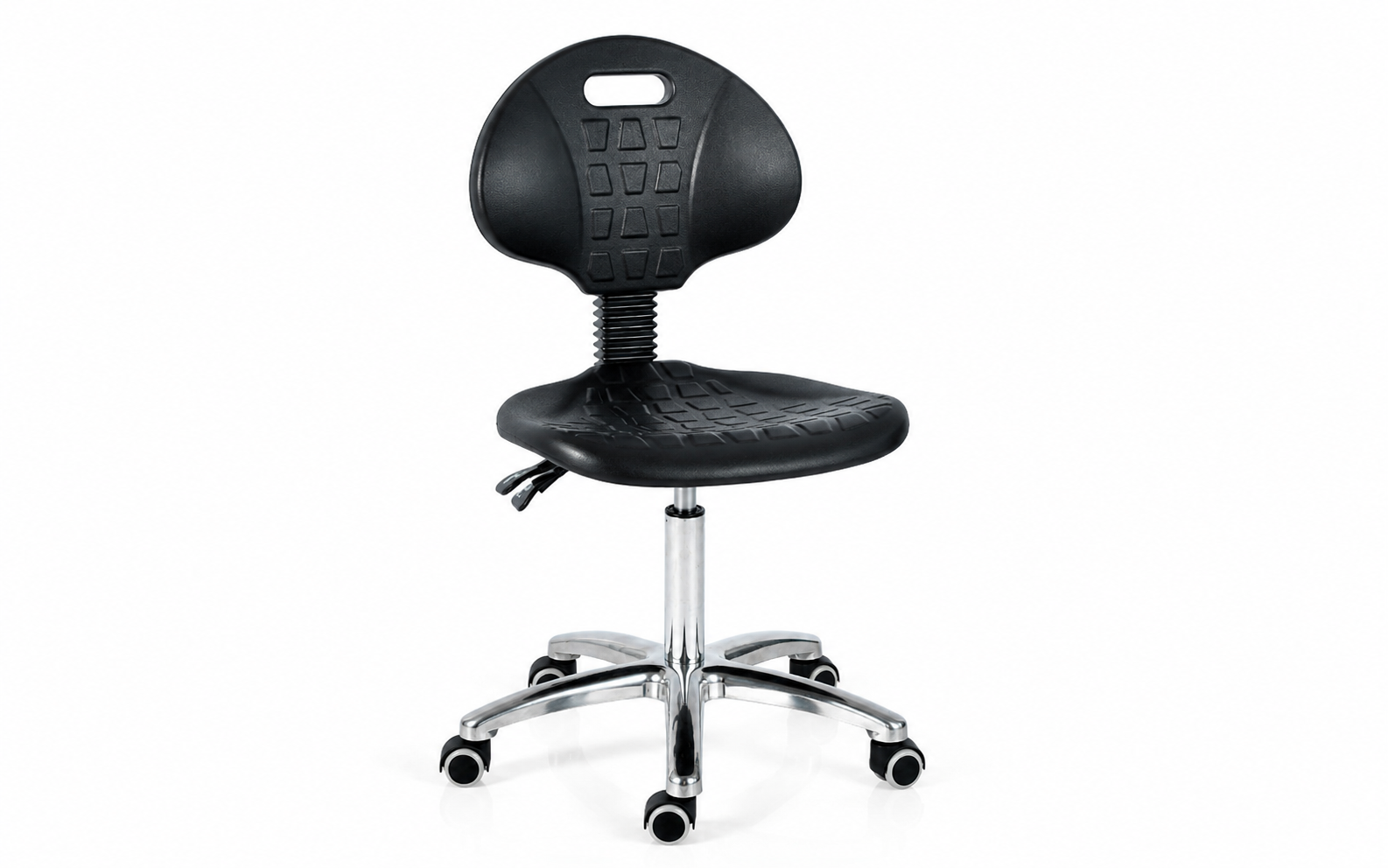
New growth in Argentina’s B2B laboratory chair market is increasingly coming from application areas where employees alternate between manual preparation, instrument operation, documentation, and short-distance movement within the same workstation. Sample preparation laboratories in pharmaceuticals, food processing, agriculture, mining, environmental testing, and industrial quality control are one important source of demand because technicians often work at elevated benches, handle multiple containers, and move between balances, mixers, testing devices, and computers. These tasks require seating that supports quick position changes without occupying excessive floor space. Instrument-monitoring areas are another growing application, especially where operators supervise chromatographs, analyzers, microscopes, imaging systems, or automated testing equipment for extended periods. In these environments, the chair must help the user maintain a stable working height while still allowing practical movement toward controls, screens, and nearby documentation areas. An industrial polyurethane with chrome foot ring and casters adjustable laboratory chair can be positioned for elevated sample-preparation and instrument stations where cleanable surfaces, adjustable height, foot support, and mobility contribute to a more efficient workflow. Argentine distributors should not present such a model as a universal solution; they should define the exact task, measure the bench, observe the user’s reach zones, and confirm the floor before recommending it. This application-led approach is especially attractive to B2B customers because it connects product specifications to measurable operational conditions. Distributors can create separate technical guides for sample preparation, instrumental analysis, microscopy, and inspection work, each showing recommended seat height, movement requirements, clearance, and user-adjustment considerations. By organizing sales content around real laboratory activities rather than broad industries, suppliers can reach buyers who are already searching for solutions to specific workstation problems.
Teaching laboratories, shared research facilities, pilot plants, and multi-user development centers are also creating new procurement opportunities because they require flexible seating that can serve changing groups and project formats. Universities, technical institutes, corporate training centers, and innovation hubs frequently use the same laboratory room for different courses, experiments, and teams. One day the space may support chemistry instruction, while another session may involve electronics, biotechnology, food science, or materials testing. Shared research laboratories face similar conditions because students, technicians, visiting researchers, and external partners may use the same benches at different times. These applications increase demand for chairs that can be adjusted quickly and standardized across many workstations. When evaluating an industrial polyurethane with chrome foot ring and casters adjustable laboratory chair, buyers may focus on how easily users can set the correct height, whether the ring supports different leg positions, whether the casters allow controlled repositioning, and whether the seat can tolerate frequent use by multiple people. Pilot plants and process-development laboratories add another growth area because they combine laboratory tasks with small-scale production, requiring seating that works around equipment, control panels, and changing layouts. Argentine distributors can attract these customers by offering room-based planning instead of quoting individual chairs in isolation. A proposal can classify stations by height, task duration, user rotation, and mobility, then recommend a limited set of compatible configurations. This helps institutions standardize procurement, simplify maintenance, and reduce confusion during future expansion. Sample programs, user feedback forms, and phased delivery plans are particularly useful in these applications because buyers often need to test one room before approving a broader rollout. Original Google-friendly content focused on teaching laboratory chairs, shared research seating, pilot plant workstations, and multi-user laboratory furniture can generate qualified leads from organizations that are planning modernization but have not yet selected a supplier.
A third group of high-potential applications includes decentralized diagnostics, mobile or satellite laboratories, clean quality-inspection rooms, and regional service laboratories that support healthcare, agriculture, energy, and manufacturing operations. These facilities are often smaller than central laboratories but may require faster setup, consistent specifications, and reliable replenishment across multiple locations. Diagnostic networks and satellite testing centers need chairs that fit compact workspaces and can be reordered for new branches without repeating the entire selection process. Regional agricultural and environmental laboratories may operate near production areas and require practical seating for sample registration, preparation, testing, and digital reporting. Manufacturing companies are also expanding in-process inspection stations, where technicians examine materials, components, or finished products close to production lines. In these applications, an industrial polyurethane with chrome foot ring and casters adjustable laboratory chair may be used at high inspection benches or shared technical stations where mobility and easy maintenance are important. Argentine distributors can increase B2B sales by creating standardized application packages for branch laboratories, compact diagnostic rooms, inspection cells, and regional testing centers. These packages can include approved dimensions, recommended spare parts, delivery schedules, room labels, and repeat-order codes. They can also partner with equipment suppliers, contractors, and regional dealers that already participate in decentralized projects. The strongest growth opportunity lies in helping customers scale a successful application from one site to many sites. By preserving approved configurations, collecting user feedback, monitoring replacement cycles, and maintaining selected components, distributors can reduce purchasing time for each new location. Application-specific landing pages and case-based articles can improve Google visibility because they answer detailed questions about compact laboratories, branch standardization, inspection seating, and regional service support. As Argentina’s laboratory market becomes more distributed and task-specialized, suppliers that understand these practical application areas will be better positioned to attract serious B2B buyers, support repeat projects, and build a more diversified sales pipeline.
READ MORE