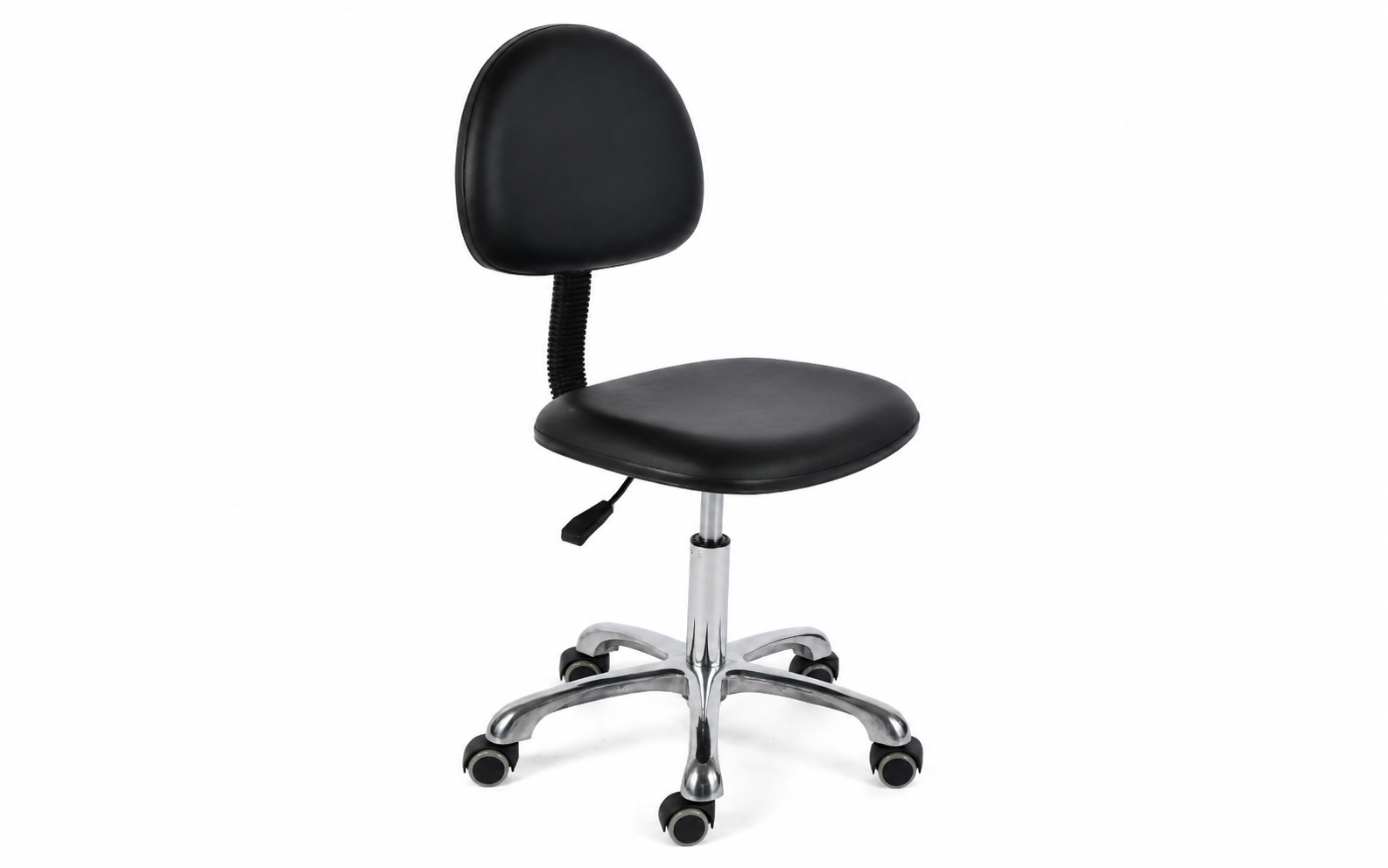
Companies in Argentina can choose reliable B2B partners for laboratory chairs by looking beyond catalogs, initial prices, and attractive promises and instead evaluating whether a potential partner can consistently reduce commercial and operational risk. A dependable partner should understand the local laboratory market, communicate clearly, protect confidential project information, and provide evidence of technical capability before asking for a large commitment. The selection process can begin with a partner profile covering years in business, ownership structure, financial stability, customer references, geographic reach, industry focus, warehouse capacity, service resources, and relationships with manufacturers or regional dealers. Buyers should also confirm whether the partner can identify application requirements rather than simply recommend the product with the highest margin. When reviewing an industrial polyurethane with chrome foot ring and casters adjustable laboratory chair, a reliable partner should ask about bench height, floor conditions, user rotation, cleaning procedures, movement between instruments, expected quantity, and future expansion. The partner should then provide accurate drawings, component details, adjustment ranges, packaging information, warranty terms, and realistic delivery expectations. Argentine companies can use a weighted scorecard to compare commercial integrity, response quality, technical accuracy, documentation, service capacity, and market reputation. Reference checks should focus on how the partner behaved when a project changed, a shipment was delayed, or a claim required resolution, because difficult situations reveal reliability more clearly than a smooth first sale. A trustworthy B2B partner should also be willing to explain limitations, reject unsuitable configurations, and document all commitments in writing. This level of transparency helps companies avoid relationships that appear inexpensive at the beginning but later create repeated revisions, inconsistent products, or unsupported after-sales obligations.
The next step is to test the partnership through a controlled pilot rather than relying only on presentations and negotiations. A pilot project can reveal how the potential partner manages discovery, samples, quotations, approvals, production coordination, delivery, and post-installation follow-up. The project should include clear responsibilities, deadlines, communication channels, and measurable success criteria. If the pilot involves an industrial polyurethane with chrome foot ring and casters adjustable laboratory chair, the evaluation should verify whether the partner confirms the correct height range, caster type, foot-ring position, base dimensions, seat finish, and spare-parts references before the order is released. Buyers should record quotation accuracy, sample quality, response time, document completeness, lead-time reliability, delivery condition, and the speed of problem resolution. A reliable partner should not disappear after receiving the purchase order; it should continue to provide meaningful updates and coordinate with procurement, laboratory management, facilities, finance, contractors, and logistics teams. Argentine distributors and importers should also evaluate whether the partner can support local market development rather than serving only as a transaction channel. This may include joint customer visits, technical training, sample programs, tender support, localized content, regional service, and account planning. Partnership agreements should define pricing principles, opportunity ownership, territory expectations, confidentiality, component-change control, warranty responsibilities, payment terms, and escalation procedures. Clear governance reduces channel conflict and protects both sides when several parties participate in the same project. By testing cooperation on a limited scale and measuring performance against agreed criteria, companies can identify partners that combine reliability with practical execution capability.
Long-term reliability depends on whether the partner can adapt, invest, and grow with the customer over time. Argentina’s laboratory market includes changing exchange rates, import conditions, regional logistics, project delays, and demand across multiple sectors, so partners must be able to manage uncertainty without compromising communication or product consistency. Companies should assess whether the partner maintains approved specifications, tracks production batches, forecasts critical components, and preserves compatible replacements for future expansion. When an industrial polyurethane with chrome foot ring and casters adjustable laboratory chair becomes part of an approved standard, the partner should be able to reproduce the same configuration, communicate any proposed change before production, and supply compatible casters, gas lifts, rings, bases, or seats when required. Financial resilience also matters because a partner that cannot fund inventory, samples, service visits, or warranty obligations may struggle to support larger B2B projects. Buyers should review insurance, credit practices, stock policies, and contingency planning where appropriate. Regular business reviews can then compare delivery reliability, defect rates, response time, customer satisfaction, repeat orders, market development, and joint opportunities. Argentine distributors can strengthen the relationship by sharing demand forecasts and customer feedback, while manufacturers or importers can provide training, product updates, and early warnings about supply risks. Original Google-friendly content about partner selection, technical support, authorized distribution, regional service, and lifecycle value can help attract serious B2B customers and reinforce the credibility of the partnership. The most reliable partner is not necessarily the largest company or the lowest bidder; it is the organization that combines integrity, technical competence, operational discipline, local commitment, and a willingness to improve. By selecting partners through evidence, pilot performance, clear governance, and long-term capability, companies in Argentina can reduce procurement risk and build stronger laboratory chair businesses across healthcare, education, research, pharmaceutical, food, and industrial markets.
READ MORE