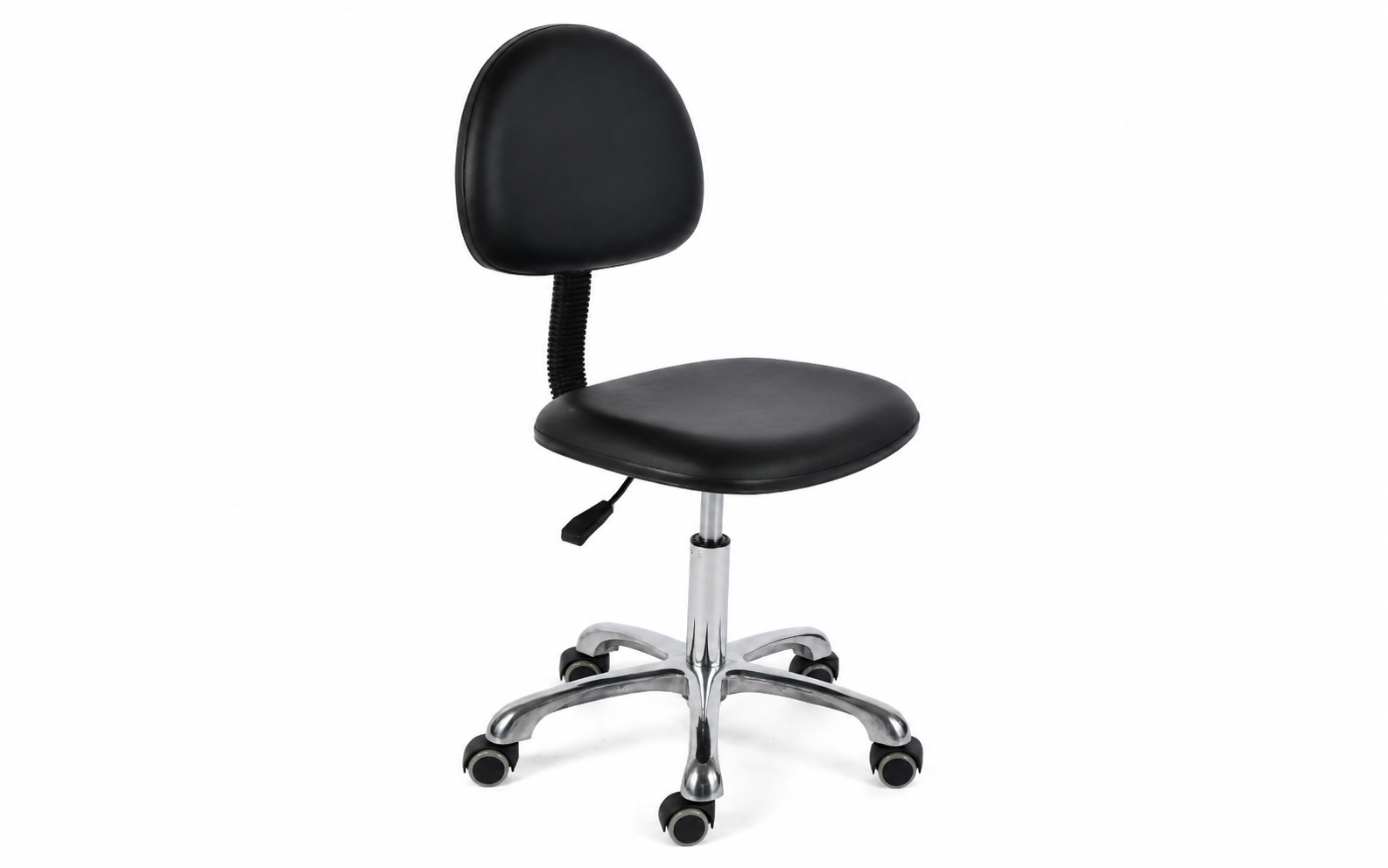
Companies in Argentina can ensure long-term supply stability of laboratory chairs by treating seating as a planned procurement category rather than a series of isolated purchases. The first requirement is to build a demand forecast that connects current inventory, replacement cycles, employee growth, laboratory expansion, new branch openings, and expected project schedules. Procurement teams should classify demand into routine replacement, confirmed projects, probable expansion, and strategic reserve so suppliers can understand which quantities are firm and which remain flexible. This forecast should be updated quarterly and shared with qualified distributors or manufacturers through a controlled planning process. Standardizing a limited number of approved configurations is equally important because excessive variation makes supply more difficult, increases spare-parts complexity, and weakens purchasing leverage. When an industrial polyurethane with chrome foot ring and casters adjustable laboratory chair is approved for elevated benches or shared technical workstations, the company should document the exact seat, base, gas lift, foot-ring position, caster type, height range, packaging, and compatible replacement parts. Argentine distributors can then forecast the required modules, reserve production capacity, and maintain selected components locally. Buyers should also map which items have long lead times, import exposure, limited substitutes, or single-source dependence. These high-risk components deserve earlier ordering, safety stock, or an approved alternate. A supply-stability plan should define minimum stock, reorder points, expected supplier lead time, and the amount of reserve required to support urgent replacements without tying up excessive working capital. By linking future demand to approved configurations and risk-based inventory rules, companies can reduce emergency buying and create a more predictable B2B supply pipeline.
The second requirement is to create a resilient supplier structure supported by framework agreements and measurable obligations. Companies should avoid depending entirely on one untested supplier, but they should also avoid spreading purchases across too many vendors that cannot maintain consistent specifications. A practical model is to select one primary supplier and one qualified backup for each approved product family, with both evaluated through samples, pilot orders, quality records, production capacity, delivery performance, and spare-parts support. The primary supplier may receive forecast visibility and planned volume, while the backup remains technically approved and periodically validated. For an industrial polyurethane with chrome foot ring and casters adjustable laboratory chair, both suppliers should be able to reproduce the approved configuration or provide a documented equivalent that has already passed technical review. Framework agreements can define pricing logic, lead-time targets, component-change notifications, warranty procedures, order-release rules, reserved capacity, and escalation paths. Argentine buyers can also use call-off orders or scheduled releases so the supplier prepares materials in advance while the company receives chairs according to actual need. Distributors and importers should maintain traceable records of production batches, drawings, inspection results, and replacement-part references. If a component becomes unavailable, the supplier must communicate the issue before production and submit the proposed substitute for approval. Supplier performance should be reviewed through delivery reliability, defect rate, response time, documentation accuracy, claim resolution, and continuity of approved components. These measures turn long-term cooperation into an accountable system rather than a relationship based on informal promises. Strong agreements and dual-source readiness give companies greater protection against transport disruption, production bottlenecks, currency volatility, and sudden changes in project demand.
The final requirement is to connect supply planning with local inventory, lifecycle support, and continuous scenario management. Companies in Argentina should prepare base, accelerated, and constrained-demand scenarios so they know how to respond if a laboratory expansion moves forward early, a shipment is delayed, or demand rises faster than expected. Under the base scenario, scheduled orders follow normal forecasts; under the accelerated scenario, reserved stock, priority production, or local assembly may be activated; under the constrained scenario, deliveries can be phased and noncritical projects postponed. If an industrial polyurethane with chrome foot ring and casters adjustable laboratory chair is part of the approved standard, the distributor should preserve enough critical modules and spare parts to support both new orders and existing installations. Local availability of casters, gas lifts, rings, bases, and seats can extend product life and reduce the need to replace complete chairs when only one component fails. Buyers should also review warehouse accuracy, stock aging, and actual consumption so reserve inventory remains useful rather than becoming obsolete. Digital dashboards can compare forecast demand, open orders, supplier capacity, inbound shipments, local stock, and expected project releases, giving procurement and operations teams one view of supply risk. Post-delivery feedback should be added to the same system so user experience, defects, service cases, and replacement frequency influence future planning. Argentine distributors can support customers with annual supply reviews, approved-configuration records, replenishment schedules, and early warnings about material or logistics changes. Original Google-friendly content about laboratory chair supply continuity, framework agreements, spare-parts planning, and multi-source procurement can also attract serious B2B buyers who value reliability. By combining demand visibility, standardized products, qualified suppliers, contractual discipline, local support, and scenario planning, companies can protect future laboratory chair availability and build a supply system that remains stable as their operations grow.
READ MORE