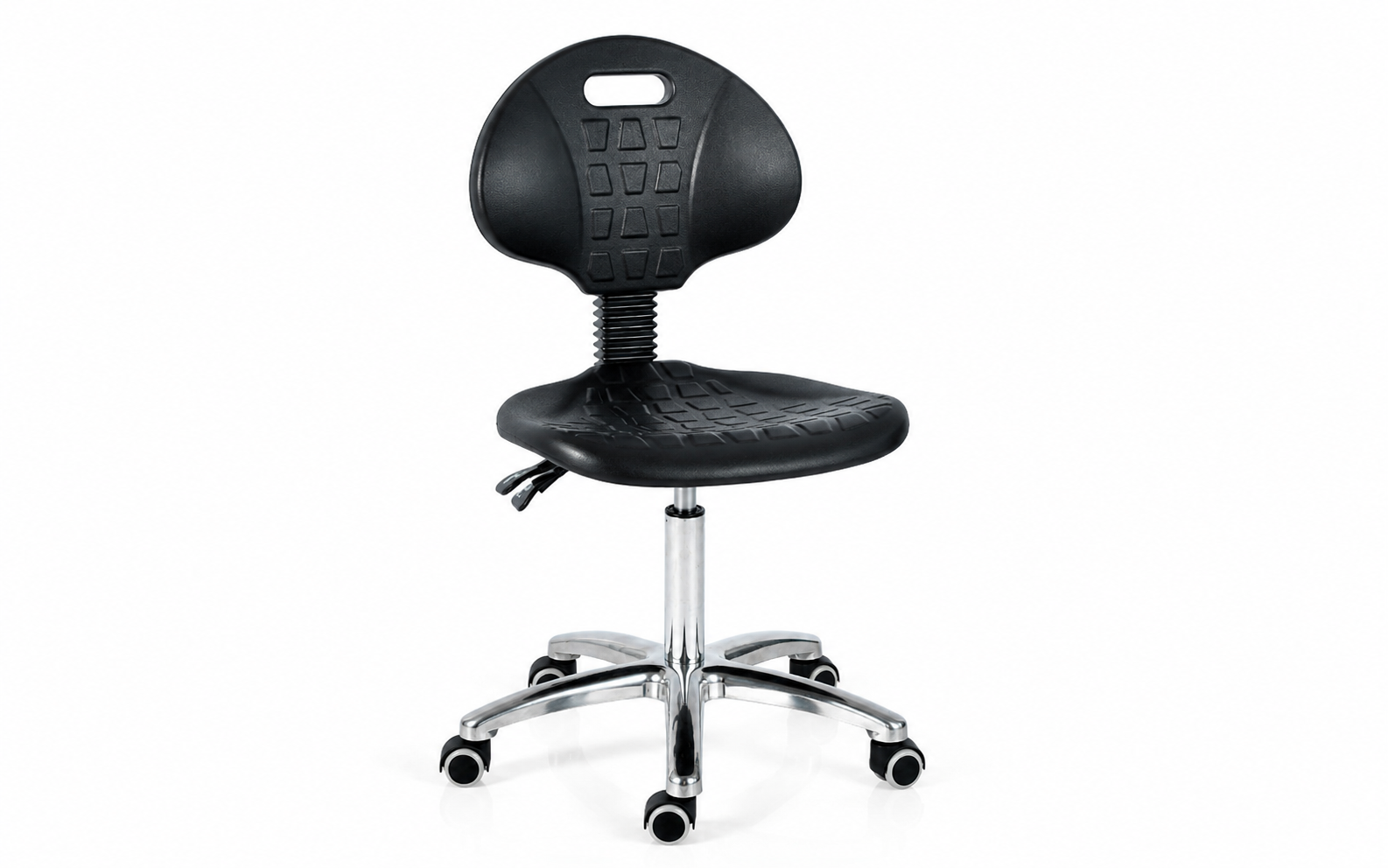
Procurement departments in Argentina can select laboratory chair suppliers suitable for long-term cooperation by using a structured qualification process that measures technical capability, application knowledge, documentation quality, and consistency across different order sizes. A supplier that offers an attractive first quotation may not be the best long-term partner if it cannot maintain approved components, explain product differences, respond to technical questions, or support future expansion. Buyers should begin with a supplier profile that covers manufacturing or sourcing structure, export experience, local service arrangements, quality-control procedures, production capacity, spare-parts availability, and financial stability. The evaluation should also include how the supplier translates workplace requirements into a reliable specification. When discussing an industrial polyurethane with chrome foot ring and casters adjustable laboratory chair, a competent supplier should ask about bench height, flooring, cleaning routines, user rotation, movement patterns, load expectations, and workspace clearance before recommending a final configuration. Procurement teams should request drawings, component lists, adjustment ranges, packaging details, sample procedures, warranty terms, and examples of previous project support. These materials reveal whether the supplier operates through controlled processes or depends on informal promises. Argentine buyers can use a weighted scorecard that gives appropriate importance to technical fit, quality evidence, communication speed, service readiness, and commercial terms rather than allowing unit price to dominate the decision. Site visits, video factory audits, sample testing, and reference checks can further confirm whether the supplier’s actual capability matches its presentation. A long-term partner should also be willing to document deviations, explain limitations, and recommend alternatives when the original request is unsuitable. This type of honesty reduces procurement risk and builds the foundation for a relationship based on measurable performance instead of short-term persuasion.
The second stage is to test whether the supplier can deliver consistent value after approval. Procurement departments should evaluate order execution through a pilot project or controlled initial order that includes clear milestones, inspection criteria, communication responsibilities, and acceptance rules. The purpose is not simply to confirm that the chairs arrive; it is to observe how the supplier handles specification confirmation, production updates, packaging, quality issues, shipping documents, and last-minute changes. For an industrial polyurethane with chrome foot ring and casters adjustable laboratory chair, the pilot should verify seat dimensions, polyurethane surface quality, foot-ring position, caster compatibility, base stability, adjustment performance, labeling, and component consistency across the batch. Argentine companies should record actual lead time, defect rate, response time, documentation accuracy, and the supplier’s effectiveness in resolving exceptions. Commercial transparency is equally important. A long-term supplier should provide clear pricing structures, explain freight and packaging assumptions, identify minimum order quantities, and disclose how component or currency changes may affect future quotations. Buyers should avoid partners that frequently alter specifications without notice or rely on unusually low prices that cannot be sustained. The supplier’s local or regional support model should also be reviewed, including who manages claims, how replacement parts are supplied, and whether technical assistance is available for distributors, contractors, and end customers. A formal supplier agreement can define approved configurations, change-control procedures, service targets, confidentiality, territory expectations, forecast sharing, and review frequency. These rules reduce misunderstanding and give both sides a stable framework for future projects. By treating the first order as a performance test rather than a one-time transaction, procurement departments can identify suppliers that are capable of supporting repeat demand and more complex B2B cooperation.
Long-term cooperation should finally be based on continuous improvement, information sharing, and mutual planning. Procurement departments in Argentina should not select a supplier only for current requirements; they should assess whether the partner can support future facilities, new applications, changing regulations, replacement cycles, and regional growth. A capable supplier should preserve approved drawings and component records, maintain traceability, forecast critical parts, and provide compatible replacements when the customer expands or repairs existing installations. If an industrial polyurethane with chrome foot ring and casters adjustable laboratory chair becomes part of an approved product standard, the supplier should be able to reproduce the same configuration, identify compatible spare parts, and communicate any proposed change before production. Buyers and suppliers can conduct quarterly or semiannual reviews covering quality, delivery, claims, cost development, user feedback, innovation opportunities, and upcoming projects. These reviews should lead to actions, owners, and deadlines rather than general discussion. Procurement teams can also share rolling forecasts and project visibility so suppliers can plan materials and capacity, while suppliers can provide early warnings about component shortages, freight pressure, or manufacturing constraints. Argentine distributors benefit when the selected supplier supports training, samples, localized technical content, and sales documentation that help them serve laboratories more professionally. Original Google-friendly content about supplier qualification, quality consistency, spare-parts planning, lifecycle cost, and long-term laboratory seating partnerships can further attract serious B2B buyers. The strongest supplier relationship combines accountability with collaboration: the buyer measures performance, the supplier provides transparency, and both sides work to reduce risk and improve value over time. By selecting partners through evidence, pilot performance, and long-term planning, Argentine procurement departments can build a more reliable supply base, avoid repeated supplier changes, and support sustainable growth across laboratory, healthcare, education, research, and industrial markets.
READ MORE